
How can brands on Amazon and other platforms offer “Pure” resveratrol at significantly lower prices?
We recently lab-tested several low-cost online brands (including Amazon). Despite the five-star reviews, we found they contained nearly zero active ingredients (0%-3% purity). Since 2007, we have regularly sent our products for Purity Certification. We supply our resveratrol to research universities worldwide, so our purity is legally and scientifically verified.
I like to compare resveratrol to gold. If someone offers you gold at half the price, you know it’s either fake or stolen. Same with resveratrol (and other dietary supplements). Customers don’t have a lab at home, so we can’t really rely on star ratings. Read the Supplement Facts on the back of the bottle. Anyone who claims their product is 99% (or “Ultra Strength”), demand to see a lab purity test, or at least a COA (Certificate of Analysis).
With cheap/fake alternatives, you’re not saving money; you’re buying expensive fillers, and nothing else!
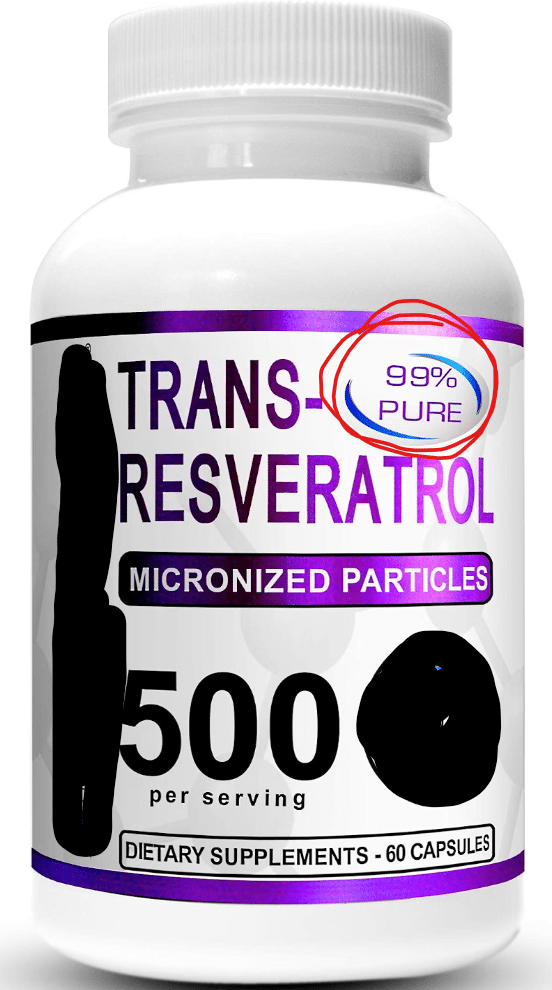
Product 1: Advertised as 99% Pure Micronized.
Lab Result: 64% Purity.
Product 2: Advertised as “Extra Strength”.
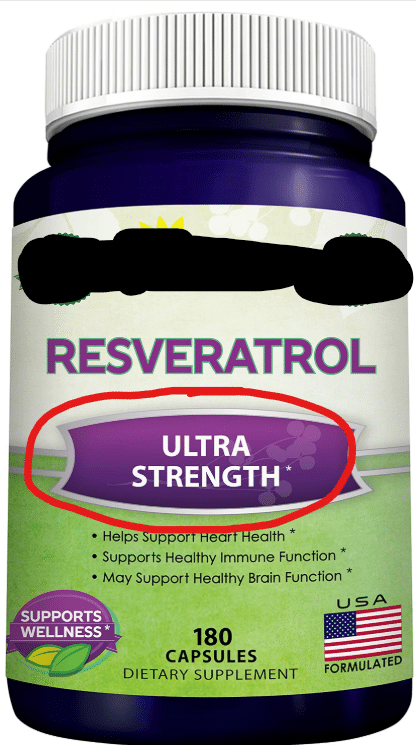
Product 1: Claim: “Ultra Strength”, 180 capsules @$29.95. Lab Result: 3% Purity.
Product 2: Claim: “99% Pure”. 60 capsules @$29.99. Lab results: 64% Purity.
More products coming soon!
